
The trip began as all mature travel plans do: with 146 messages, three abandoned date polls and one person saying she was “fine with anything” while rejecting every option.
Eventually four of us booked a long weekend in a town with bookstores, restaurants and no child requiring transportation. We had been friends since our twenties. We had seen one another through marriages, one divorce, two funerals, several career collapses and a period when we all wore very thin eyebrows. How difficult could three nights be?
The rental had two bedrooms.
We had remembered our younger selves
At 24, we could sleep sideways on a sofa after eating nachos at midnight. At 54, each of us arrived with a pharmacy, a pillow preference and a morally inflexible position on room temperature.
One of us snored. One needed a fan that sounded like a small aircraft. One woke at five. I woke whenever anybody else moved, breathed or considered moving. By seven the first morning, we were drinking coffee with the brittle politeness of diplomats after failed talks.
We had budgeted for restaurants. We had not budgeted for each other’s sleep architecture.
The itinerary became a referendum
The museum person wanted the museum. The walking person wanted eleven miles before lunch. The resting person had interpreted “girls’ trip” as “lie down somewhere attractive.” Nobody was wrong, which made everyone extremely annoying.
By dinner on the second night, the trip was carrying thirty years of affection and six hours of collective sleep. A silence formed after someone suggested an early hike.
Then the quietest friend said, “There is a hotel across the street. I am getting a room.”
We stared at her.
“Not because I’m angry,” she continued. “Because I would like to remain your friend.”
The extra room saved the trip
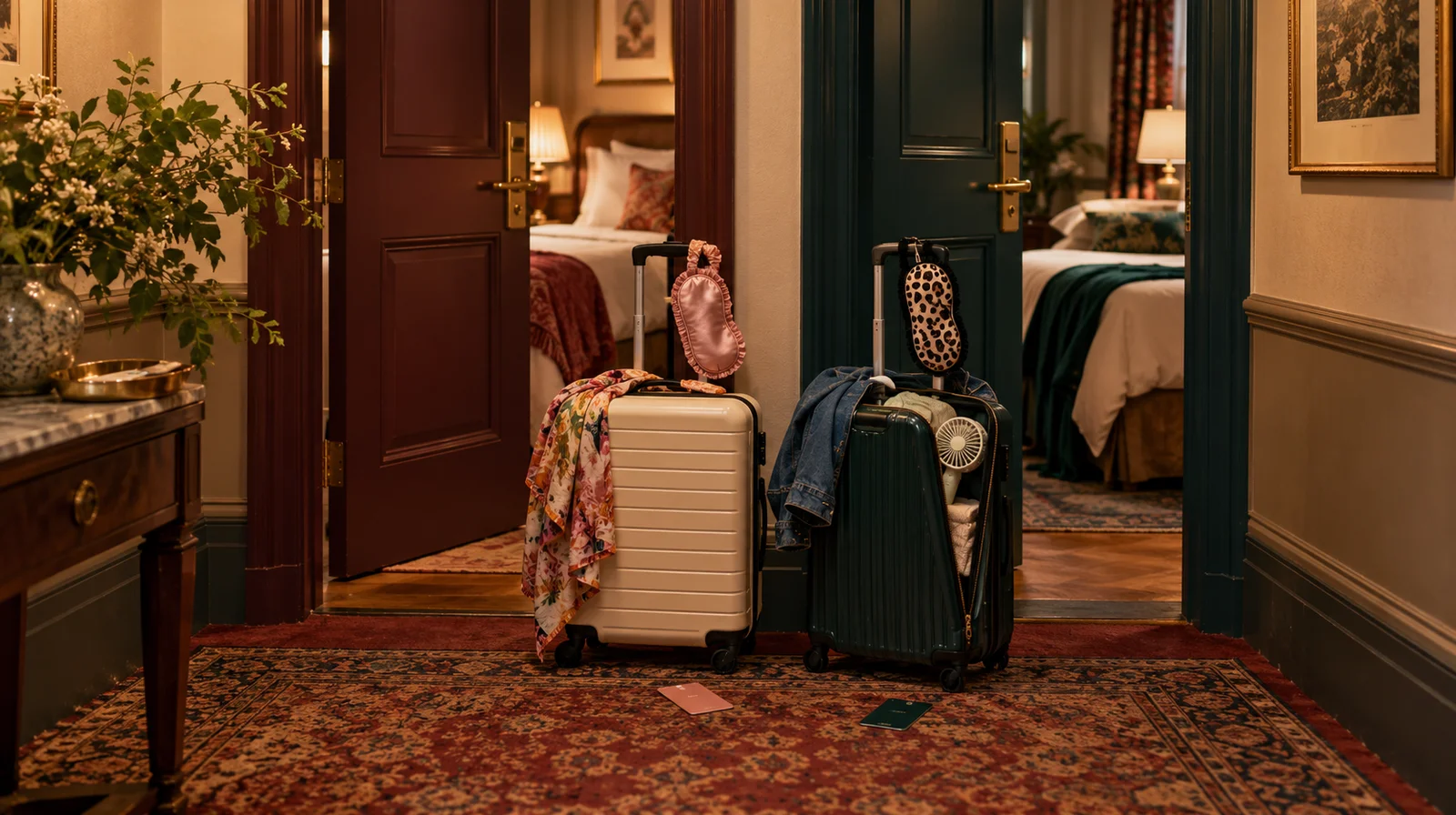
Within fifteen minutes, two of us had booked rooms. The others kept the rental. Nobody framed it as rejection. Nobody insisted we were wasting money. We simply admitted that privacy had become part of the travel budget, like parking and coffee.
The next morning, we met for breakfast rested and almost tender. We split up for the afternoon: museum, walk, nap, shops. At dinner, everybody had something to report because we had not spent the day negotiating a single shared mood.
The trip we had imagined was a sleepover from 1996 with better wine. The trip we needed included closed doors.
We wrote new rules on the flight home
Separate rooms when possible. One planned activity a day. Anybody can skip anything without presenting a defense. No surprise hikes. Tell the truth about budgets before booking. The person who says “I don’t care where we eat” loses veto power.
We are planning another trip. It has fewer messages, more rooms and one entire afternoon labeled NOTHING. This is not less intimate. It may be the most mature form of love we have achieved.
Behind the story
AARP’s 2026 travel research found that nearly two-thirds of adults 50-plus planned to travel during the year. Spending time with family or friends was the leading travel motivation, while cost and disruption remained major considerations. The research also found that health and accessibility needs shape how older adults travel rather than eliminating travel itself.
AARP Research: 2026 Travel Trends for Adults Age 50 and Older